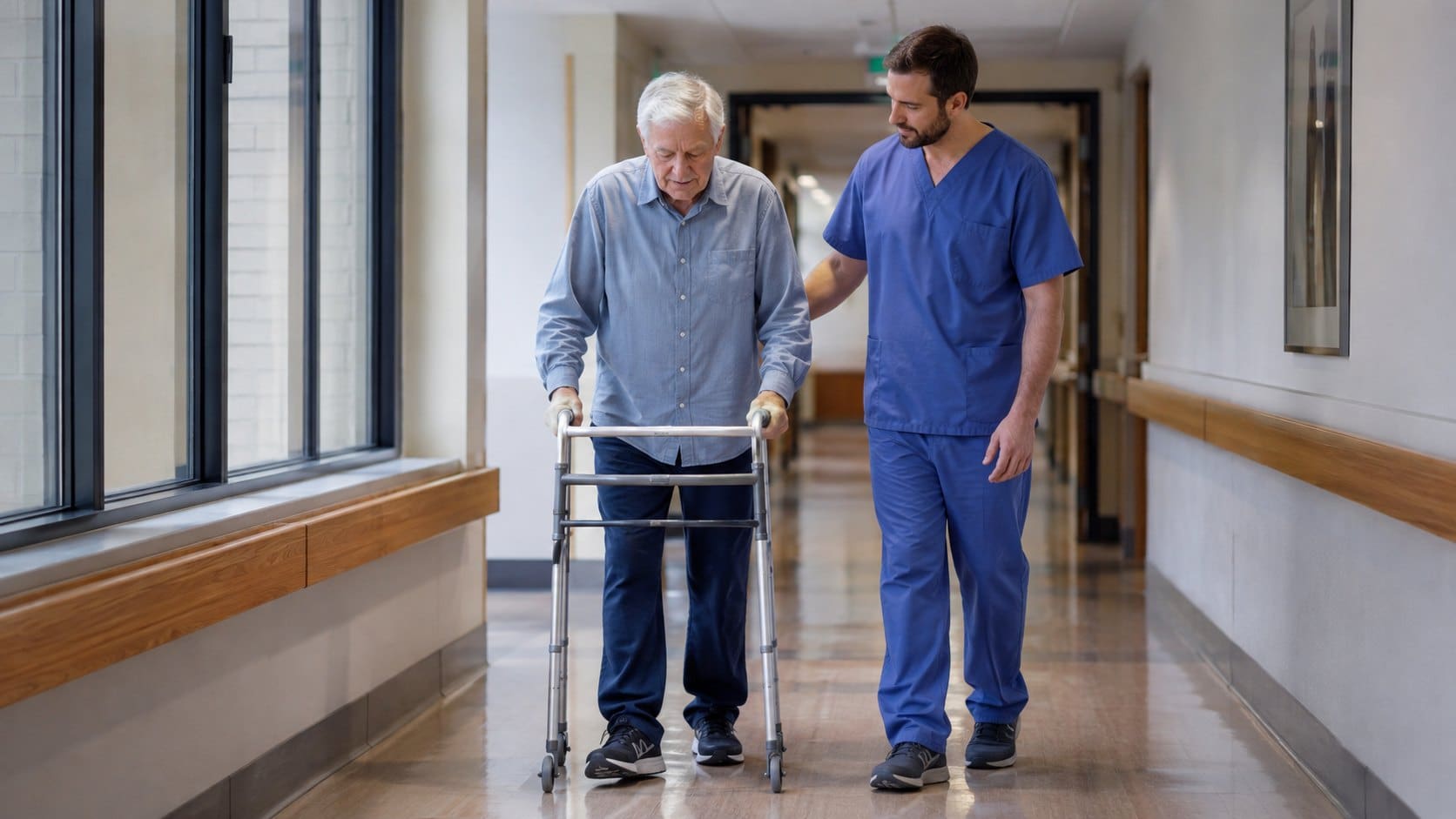
A fall-prevention plan should explain what this person needs when they get out of bed, use the bathroom or move through an unfamiliar room. A risk label alone does not tell the next nurse how to help.
Start with an individual assessment, then connect each relevant finding to an action the patient and care team can understand. Revisit the plan when the person’s condition or surroundings change.
Ask what has happened before
Invite the patient to describe previous falls, near falls, dizziness, urgency, fear of falling and their usual mobility. Ask what assistive devices they use and whether those devices are available. Avoid assuming that someone who walked independently at home needs no help after a procedure or illness.
NICE’s 2025 falls guideline recommends comprehensive assessment in hospital and residential settings for people within its covered population: older adults and adults 50 and over at higher risk. Assessment includes factors such as mobility, cognition, medications, continence and cardiovascular concerns. Apply the relevant assessment pathway for your patient group.
Turn a finding into a bedside action
If the person cannot reach their walking aid, placing a fall-risk sign on the door does not address that barrier. If they cannot find the call button, telling them to call for help is incomplete. Check the action in the actual environment.
- Place the call device where the patient can reach and operate it.
- Keep the route clear and provide appropriate lighting.
- Check footwear and availability of the prescribed mobility aid.
- Clarify the assistance needed for transfers and walking.
- Plan access to toileting around the person’s needs.
These checks supplement the individualized plan. They do not replace assessment of new dizziness, weakness, confusion or other symptoms.
Make the mobility instructions specific
“Assist as needed” can mean different things to different people. Confirm the current mobility recommendation and communicate the type of help and equipment required using your institution’s terminology. Seek physical or occupational therapy input when indicated.
In a fictional scenario, a patient asks to walk to the bathroom after reporting new lightheadedness. The useful response is to assess the symptom and arrange appropriate assistance, not to rely on yesterday’s independent-mobility entry.
Include the patient in the plan
Explain why assistance is recommended and ask what may make the plan hard to follow. Someone may avoid calling because they expect a long wait or do not want to bother staff. That concern creates an opportunity to agree on a workable approach.
Ask the patient to show you how they would request help. Offer communication and sensory supports where needed. A plan that can only be understood by reading small print may not work for the person using it.
Reassess after a meaningful change
A new medication effect, procedure, change in cognition, different room or altered mobility can make an earlier plan outdated. Review the bedside setup and communicate changes to the team. Medication changes belong with the appropriate prescriber and pharmacist review.
Falls prevention should support appropriate movement, not default to keeping everyone in bed. Discuss how to preserve mobility while addressing the person’s risks. Alarms or observation arrangements, when used, need a clear response plan and do not replace care.
If a fall occurs, assess before moving
Activate the local post-fall response and assess for injury and acute deterioration. Do not rush to lift the person before assessing possible injury. Use the required assistance and handling equipment, and arrange urgent review when indicated.
Document what was observed, the patient’s account, assessment, notifications and follow-up. Then revise the plan using what the event revealed. Avoid blame: the aim is to understand the circumstances and prevent another gap.
Related reading: A bedside shift report example.
Explore NurseBrain® Synapse to stay organized throughout your shift.