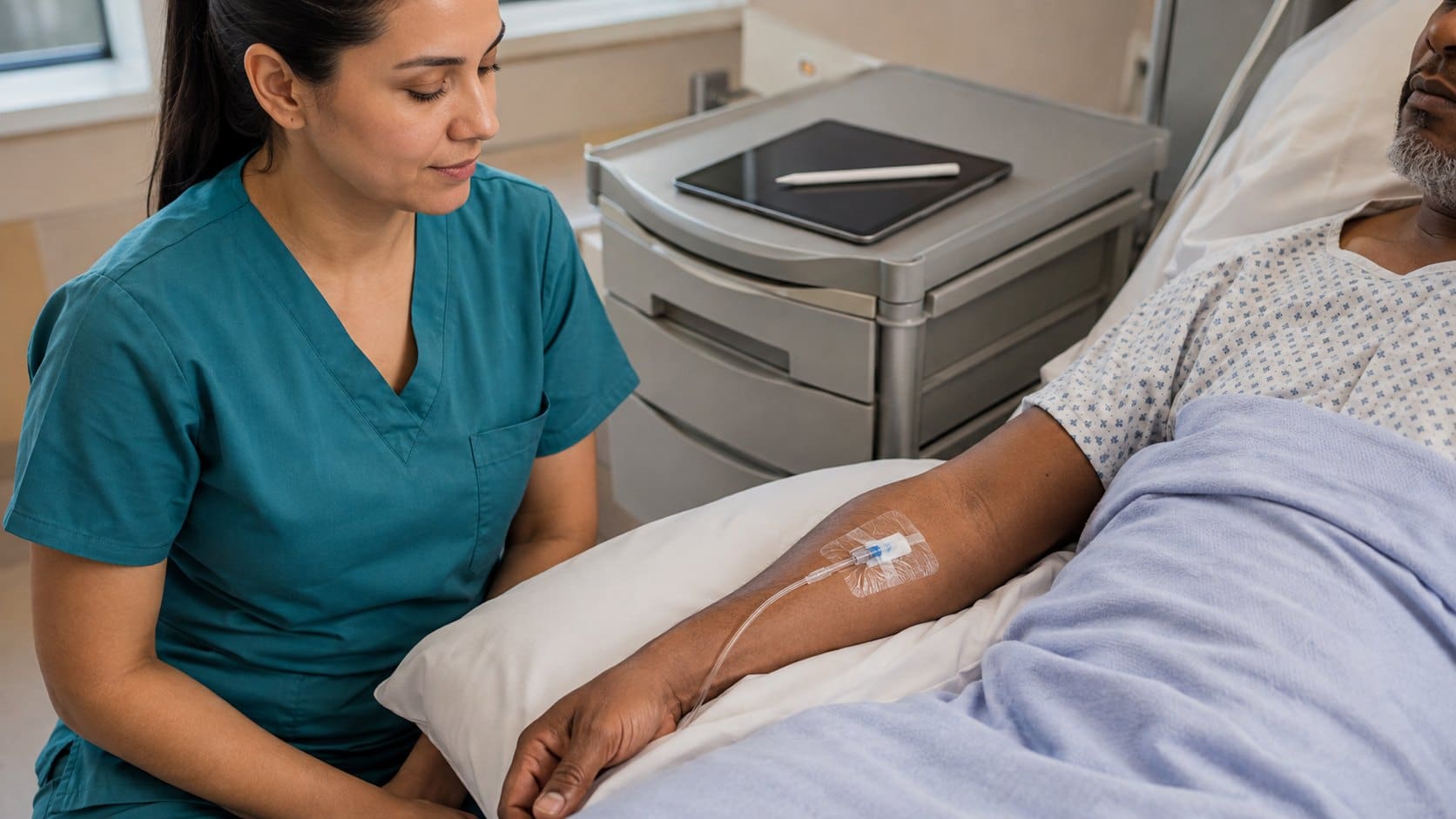
A peripheral IV assessment should answer more than whether the pump is running. Ask how the site feels, inspect the insertion area and dressing, and check whether the device still meets the treatment plan. A functioning pump does not prove that the catheter or surrounding tissue is unaffected.
This adult nursing refresher supports routine assessment. Use your facility’s vascular access policy, medication-specific instructions, and required competencies for insertion, access, removal, and complication management.
Start with the patient’s report
Ask about new tenderness, burning, tightness, or discomfort during infusion. Give the patient a specific reason to speak up: “Please tell me if this area starts hurting or feels different.” Check the site when symptoms occur rather than waiting for the next scheduled round.
Explain what you are inspecting. A patient may think discomfort is an unavoidable part of an IV and not mention it until asked.
Inspect the site and dressing
The CDC’s catheter infection prevention guidance recommends regular site assessment and removal of peripheral catheters with phlebitis, infection, or malfunction. Findings associated with phlebitis include tenderness, warmth, redness, and a palpable venous cord.
Assess dressing integrity and whether the insertion site can be evaluated. Follow the prescribed procedure when a dressing is damp, loose, or visibly soiled. Do not lift a secure dressing simply to take a casual look beneath it.
Document the observed findings rather than relying only on “IV okay.” Distinguish what the patient reports from what you see or assess.
Look for a complication during infusion
Swelling, leakage, discomfort, or changes around the site require assessment. Infiltration and extravasation both involve fluid leaving the intended vessel, but the drug or solution matters because tissue injury risk and management differ.
eviQ’s extravasation guidance, developed for anticancer therapies and contrast, describes stopping the infusion and obtaining help promptly. Suspected extravasation is not a situation for a trial flush. Leave the device in place initially while the trained team follows the drug-specific pathway, because aspiration or treatment through it may be needed.
Do not improvise a warm or cold compress. The appropriate intervention depends on the agent. Obtain the medication name, concentration, amount delivered, and timing for the responding clinician or pharmacist.
Review access practice and continued need
Use the required hand hygiene and aseptic access steps every time. The CDC’s core infection prevention practices apply across settings and include hand hygiene, appropriate equipment handling, and attention to invasive devices.
Confirm the ongoing indication during routine review. A catheter retained “just in case” still needs a clear clinical reason. Follow the local removal and replacement policy rather than applying a universal dwell-time rule from a brief article.
Make the escalation specific
For example, an illustrative report could say: “The patient reports new burning during the infusion. Swelling is visible around the left forearm site. I stopped the infusion and need assessment of possible extravasation.” Add the actual medication details and actions taken; do not copy example findings into a real record.
Record the assessment time, site, symptoms, relevant infusion details, notification, response, and follow-up plan. Our SBAR guide can help structure the call. Explain to the patient what happens next and reassess according to the treatment pathway.