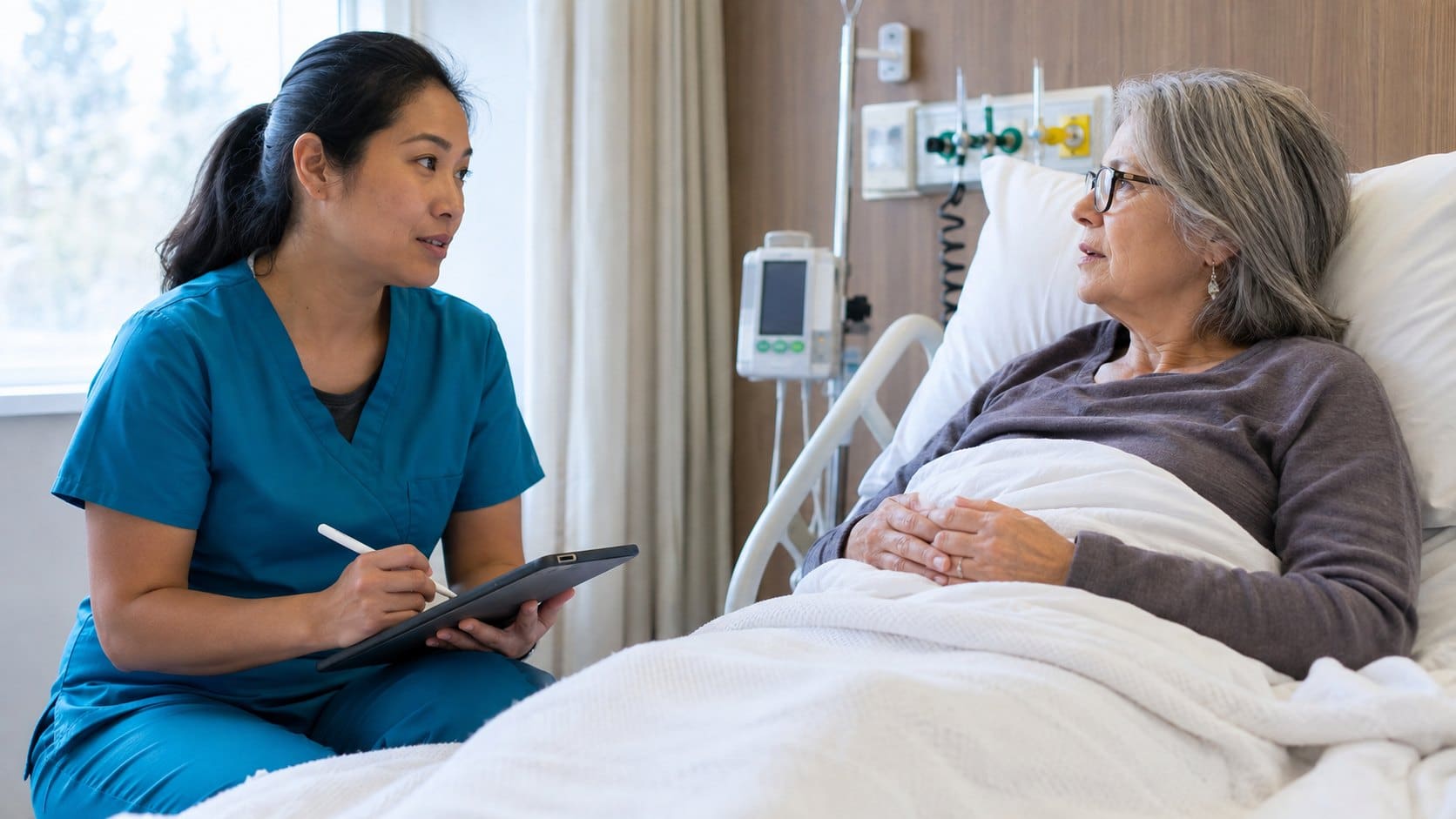
Pressure injury prevention in nursing begins with checking the individual, not only the turning schedule. Skin condition, mobility, comfort, equipment, and the ability to reposition all affect the bedside plan. A recorded turn does not tell you whether pressure was actually relieved.
Use the patient’s prevention plan, current risk assessment, and local policy. This adult refresher supports routine checks; it does not replace wound assessment training or specialist advice.
Review risk when the situation changes
Consider whether the person can change position independently, whether pain limits movement, and whether devices or prolonged sitting create additional pressure. Reassess after relevant changes in condition rather than treating the admission assessment as permanent.
NICE guidance on pressure ulcer prevention recommends risk and skin assessment and an individualized prevention plan. It also advises against rubbing or massaging skin to prevent a pressure ulcer. Report a concerning area for assessment rather than trying to rub the discoloration away.
Check what the new position accomplishes
The International Guideline’s 2026 repositioning chapter states that a pressure-redistributing support surface does not entirely replace repositioning. The interval and technique should reflect the person’s needs, response, comfort, and support surface.
After repositioning, check whether the intended pressure points are relieved and whether another area now bears excessive pressure. Look for objects or tubing beneath the person. Confirm that supports have stayed where they belong and that the person is comfortable.
If the person cannot tolerate the planned position, describe the reason and seek help adapting the plan. Do not record a position that was not achieved or assume that a small movement produced the intended offloading.
Give heels a separate check
The International Guideline’s heel prevention chapter recommends elevating at-risk heels so they are free of the support surface. Support should distribute the leg’s weight appropriately along the calf without creating pressure at other vulnerable structures.
Check the actual heel position after placing a pillow or device. A pillow under the legs does not necessarily mean the heels remain offloaded. Reassess as the person moves, and follow the instructions for the selected equipment. A preventive dressing may be part of a plan, but it is not a substitute for pressure relief.
Include moisture, equipment, and daily comfort
Inspect skin and device contact areas according to the care plan. Address moisture and incontinence using the prescribed skin-care approach. Review nutritional concerns through the appropriate assessment and referral process rather than adding supplements automatically.
Ask which position is comfortable and explain why assistance is offered. For someone who can move independently, confirm that their movements actually relieve the relevant areas. For someone who needs help, ensure that assistance and suitable handling equipment are available.
Document the response and unresolved concern
An illustrative note might describe the position achieved, heel support checked, skin findings, comfort response, and next planned review. If discomfort prevents the intended position, document the limitation, alternative action, and person notified. Avoid a generic entry that conceals the difficulty.
Keep wording observational. Record what you assessed rather than assigning a wound category beyond your training. Escalate newly concerning skin or tissue findings according to the local pathway.
At transfer, communicate the support surface, assistance required, individualized repositioning plan, heel strategy, and areas needing follow-up. Our handoff checklist and nursing charting guide provide related communication practice.