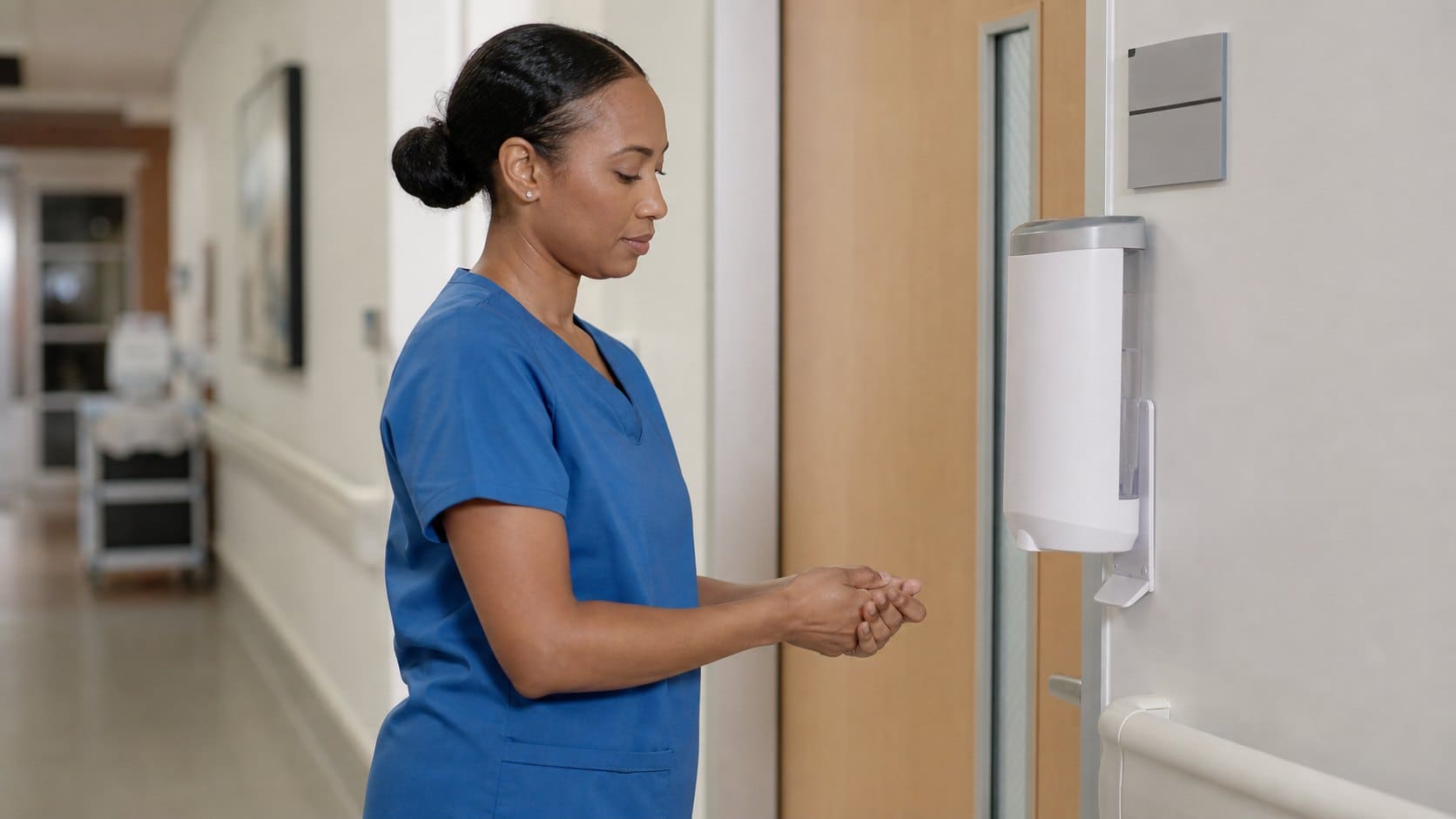
Standard Precautions apply to every patient. Transmission-Based Precautions add measures when a suspected or confirmed infection needs additional control. The distinction matters because an isolation sign does not replace the everyday practices that remain necessary in every room.
For each encounter, use current facility policy and organism-specific guidance. A general refresher cannot supply the complete PPE, placement, or discontinuation instructions for every infection.
Standard Precautions start with the task
The CDC’s Standard Precautions overview describes hand hygiene, exposure-based PPE, respiratory hygiene, injection safety, and appropriate handling of equipment and the environment. Choose protection according to the contact or splash exposure reasonably expected during the task.
A patient without a known infection may still require gloves, a gown, or eye and face protection for a particular activity. Conversely, the label “standard” does not mean wearing every item of PPE for every interaction. Assess the task and follow the specified procedure.
Transmission-Based Precautions add another layer
The CDC isolation guideline describes three categories: Contact, Droplet, and Airborne Precautions. They may be combined for some infections and are used in addition to Standard Precautions.
Precautions may be started based on a suspected clinical syndrome before the organism is confirmed. Do not assume that pending laboratory results mean no additional measures are needed. Check the active instructions and ask infection prevention or the responsible clinician when the plan is unclear.
Check the instructions before entering
- Category: which precautions are currently required?
- Equipment: what PPE and patient-care supplies are needed for the planned task?
- Room: are there placement or door requirements that apply?
- Transport: what must be communicated to the receiving department?
A surgical mask and a respirator are not interchangeable simply because both cover the face. Use the specified protection and your organization’s respiratory protection requirements. Ask for clarification before an uncertain exposure when possible, while following emergency procedures when urgent care is needed.
Include reusable devices in the plan
The CDC’s core practices address reprocessing reusable equipment between patients or when soiled. Consider anything that travels between spaces, including shared monitors and approved clinical tablets. Follow the equipment manufacturer’s cleaning instructions and facility infection prevention policy.
A practical check is to identify where a used item goes next. Is it dedicated to the room, ready for cleaning, or already processed for another patient? Keeping that status clear prevents a clean-looking surface from becoming the only basis for reuse.
Explain the precautions without stigmatizing
Tell the patient why additional measures are in place and what they should expect. An original example is: “We are using these precautions while the team checks the cause of your symptoms. I will explain what that means for visitors and leaving the room.” Avoid labeling the person as dirty or dangerous.
Provide the actual visitor instructions and make sure the patient knows how to call for assistance. Precautions should not become a reason to overlook comfort, communication, or routine care.
Handoff the active plan
Include the current category, relevant pending information, and any transport arrangements. Discontinue or change precautions only through the designated process. Our nursing handoff checklist can help keep those details visible when responsibility transfers.