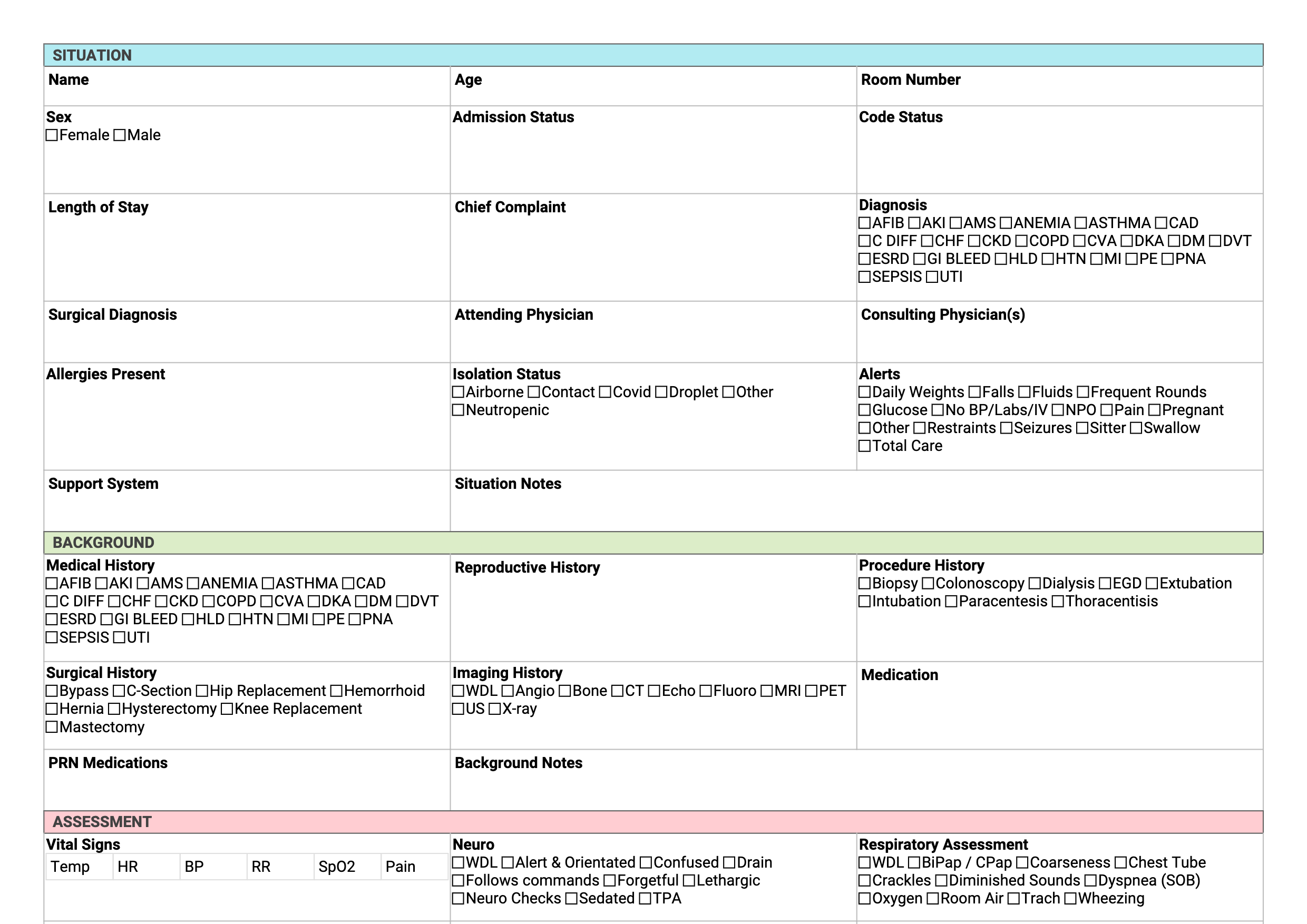
GYN nursing covers a wide clinical range — elective laparoscopic surgeries in the morning, complex oncology cases in the afternoon, and postpartum-adjacent patients whose care crosses obstetric and surgical lines. The brain sheet anchors your assessment across that range: postop vitals trends, wound and drain status, pain management, voiding and catheter status, and the reproductive health context that informs everything from medication choices to discharge teaching. Download the free printable PDF below, or use the same template digitally in NurseBrain Synapse so your surgical and postop tracking stays organized through multi-patient shifts.
What is a gynecology nursing brain sheet?
GYN floors mix surgical recovery with complex chronic disease — hysterectomy patients recovering from laparoscopic cases alongside patients managing ovarian cancer, endometriosis, or fibroids with significant symptom burden. Your brain sheet holds the surgical timeline for postop patients and the chronic condition context for medical GYN cases. For postop patients: anesthesia type, procedure, estimated blood loss, current vitals trend, pain scores, last voiding time, and drain outputs. For medical GYN: active diagnoses, current medications, symptom pattern, and care plan priorities.
What to track on a gynecology nursing brain sheet
Patient name, room, diagnosis, and surgeon or attending, procedure and time since surgery, anesthesia type and recovery status, vital signs trend, pain score and analgesic regimen, foley catheter status and voiding log, wound assessment and dressing status, drain type and output volumes, IV access and fluid status, bleeding and pad count for postop GYN, and discharge readiness criteria.
GYN brain sheet vs. the surgical record
The surgical record, anesthesia notes, and intraoperative documentation are the permanent clinical record. The GYN brain sheet is what you work from on the floor — current postop status, the trajectory of vitals and pain over the past few hours, and the care plan priorities for this shift. Postop GYN nursing involves rapid status changes; the brain sheet keeps you ahead of the curve. NurseBrain Synapse is the digital version — track postop vitals trends, pain scores, and drain outputs from your phone so you're never reconstructing the last four hours before report.
Gynecology nursing brain sheet FAQ
What postop assessments should a GYN nurse track on a brain sheet?
Vital signs trend since PACU, pain score and current analgesic regimen, voiding status (foley in/out, last void, voiding trial status), wound and dressing assessment, drain type and output, IV access and fluid status, diet advancement, and first ambulation time.
How do GYN nurses track bleeding on a brain sheet?
Document pad count with times and saturation level — light, moderate, heavy. For postop hysterectomy patients, note any vaginal bleeding assessment along with abdominal wound status. Escalating bleeding is a red flag that warrants immediate escalation regardless of what else is on the shift.
What's specific about GYN oncology nursing on a brain sheet?
GYN oncology patients may have complex medication regimens, active chemotherapy effects, peritoneal disease affecting bowel function, and significant symptom burden. The brain sheet needs space for current treatment phase, active symptoms, functional status, and the care plan priorities your attending set on rounds.
How is gynecology nursing different from postpartum on a brain sheet?
GYN brain sheets focus on surgical recovery, wound care, and pelvic/abdominal assessments rather than postpartum-specific elements like fundal height, lochia, and breastfeeding. However, GYN floors sometimes care for postpartum patients who had surgical deliveries — in that case, you may need elements of both.
Can GYN nurses use a brain sheet app to track postop recovery?
Yes. NurseBrain Synapse lets you track vital sign trends, pain scores, drain outputs, and recovery milestones from your phone between nursing station visits, so your postop picture stays current without waiting until you sit down to chart.