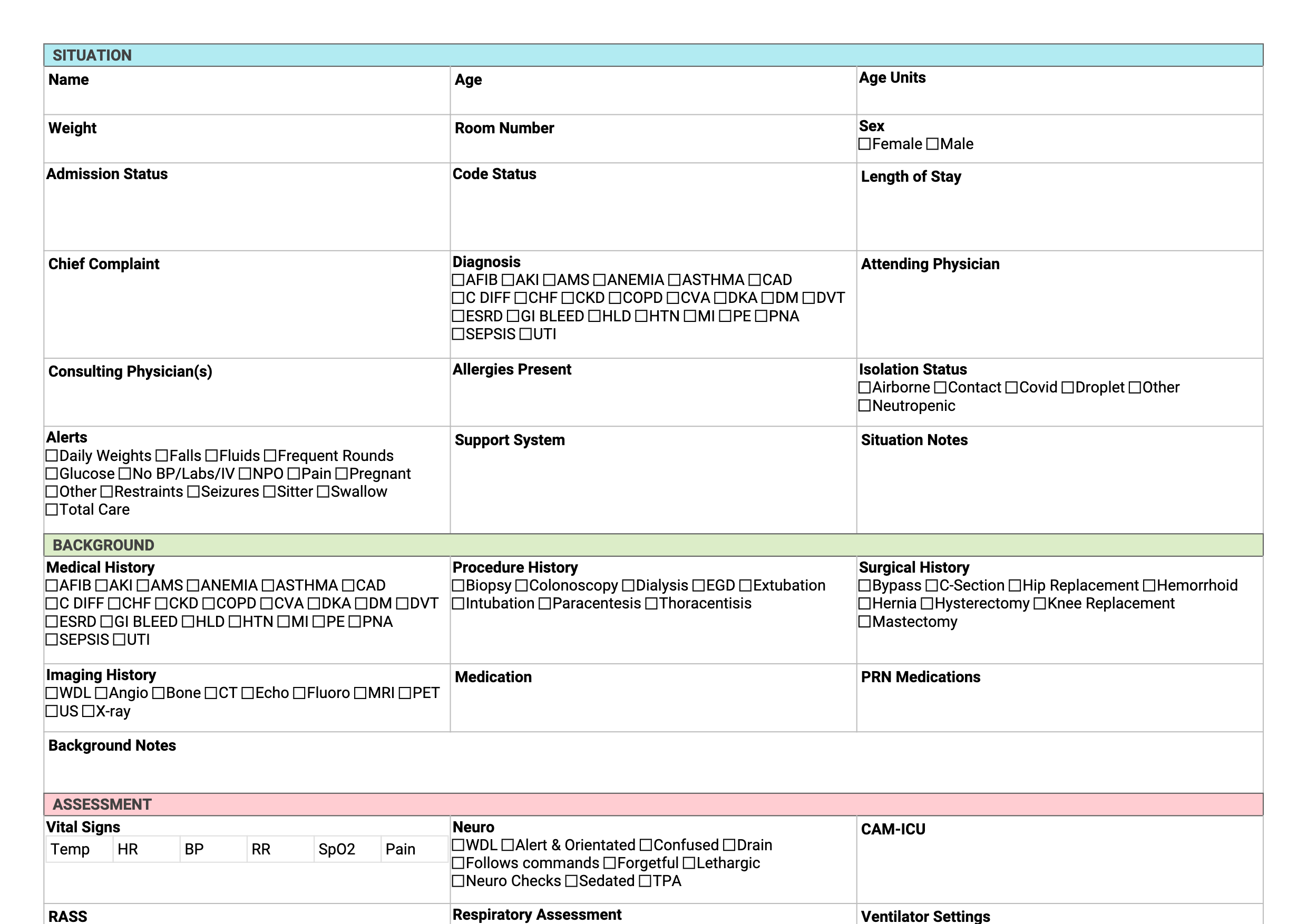
Whether your unit calls it a NICU brain sheet, a neonatal report sheet, or a NICU cheat sheet, it's all the same tool: a single page that holds everything you need for each baby on your assignment. Feedings, weights, vent settings, last suction, last bath, neuro checks, parents at bedside, and the dozens of NICU-specific details that change shift to shift. Download the free printable PDF below, or open the same template digitally in NurseBrain Synapse so it stays clean across back-to-back shifts.
What is a NICU brain sheet?
NICU nurses track two or three of the most complex patients in the hospital — sometimes each under a pound — and every detail matters. The brain sheet is how you hold it all: the 0900 PRN Tylenol, the time the IV is due to be re-sited, which baby is getting weighed at 1500, and what mom is supposed to bring back from pumping. It's not the chart and it's not legal documentation. It's the working scratch pad that keeps you from forgetting anything across a 12-hour shift where the plan changes constantly.
What to track on your NICU brain sheet
NICU shifts move fast and the details that matter are different from any other floor. Most NICU nurses track: corrected gestational age; weight (today and trend); feeding type and volume, route (PO/NG/OG/TPN); feeding intolerance signs (residuals, abdominal girth, last stool); respiratory support (room air, HFNC, CPAP, NIPPV, ventilator settings); temperature stability; IV access (peripheral, PICC, UAC/UVC, central line dressing change due); neuro checks (HUS results if relevant, fontanelle, tone, reflexes); labs (last bili level, CBC, electrolytes, blood gas); parents at bedside and any care updates; and pending procedures (LP, eye exam, hearing screen, car seat trial, circumcision, discharge teaching).
NICU report sheet vs brain sheet: which one do you need?
There's no real difference. "Brain sheet," "report sheet," and "cheat sheet" all describe the same thing: the personal worksheet a NICU nurse keeps during shift. Some hospitals print blank brain sheets in orientation packets; others expect each nurse to bring their own. The free NICU PDF above works on your clipboard. NurseBrain Synapse is the digital version: it carries your data forward between consecutive shifts, keeps feeding schedules and vent settings organized, and builds your SBAR handoff from what you've already entered — no recopying at shift change.
NICU Nurse FAQ
What does a NICU nurse do?
A NICU (neonatal intensive care unit) nurse cares for newborns who are premature, sick, or recovering from surgery. On any given shift you're managing feeds (PO, NG, OG, or TPN), respiratory support from room air to a high-frequency oscillator, temperature, IV access, neuro checks, and parent updates. NICU nurses typically carry 1–3 patients depending on acuity (Level III/IV NICUs run 1:1 or 1:2; feeder-grower babies in step-down may run 1:3 or 1:4).
What's the difference between NICU and PICU?
NICU (neonatal intensive care) cares for newborns from birth to roughly 1–2 months corrected age, including extreme preemies as small as 22–23 weeks gestation. PICU (pediatric intensive care) cares for older infants and children. The clinical work is different: NICU centers on respiratory support, feeding intolerance, thermal regulation, and developmental care; PICU is closer to scaled-down adult ICU work. NICU report sheets are typically organized by baby with growth, feeds, and respiratory support sections; PICU sheets look more like adult ICU brain sheets.
How many babies does a NICU nurse care for?
Ratios depend on acuity level. Critical-care babies (Level IV NICU, vented, on multiple drips, or fresh post-op) are typically 1:1 or 1:2. Sicker preemies on respiratory support are 1:2. Feeder-grower babies in step-down or special care nurseries can be 1:3 or 1:4. AAP guidelines support the 1:1 ratio for the highest-acuity patients.
What should I include on my NICU brain sheet for a vented baby?
For a vented neonate, your brain sheet should track: vent mode and settings (PIP, PEEP, rate, FiO2, iTime), most recent blood gas, suction frequency and last suction time, oral care due, ETT position and last reposition, sedation infusions if any, paralytic infusions and last train-of-four, last weight and weight trend, feeds (held, TPN, advancing), I&O, and any pending procedures or lab draws.
Can I customize this NICU brain sheet?
Yes. You can either print the free PDF and write on it, or tap 'Customize' to open the template in NurseBrain Synapse where you can rearrange sections, add fields specific to your unit's workflow, and use it digitally on your phone or tablet during your shift. The digital version stays clean across back-to-back shifts so you don't have to recopy anything.