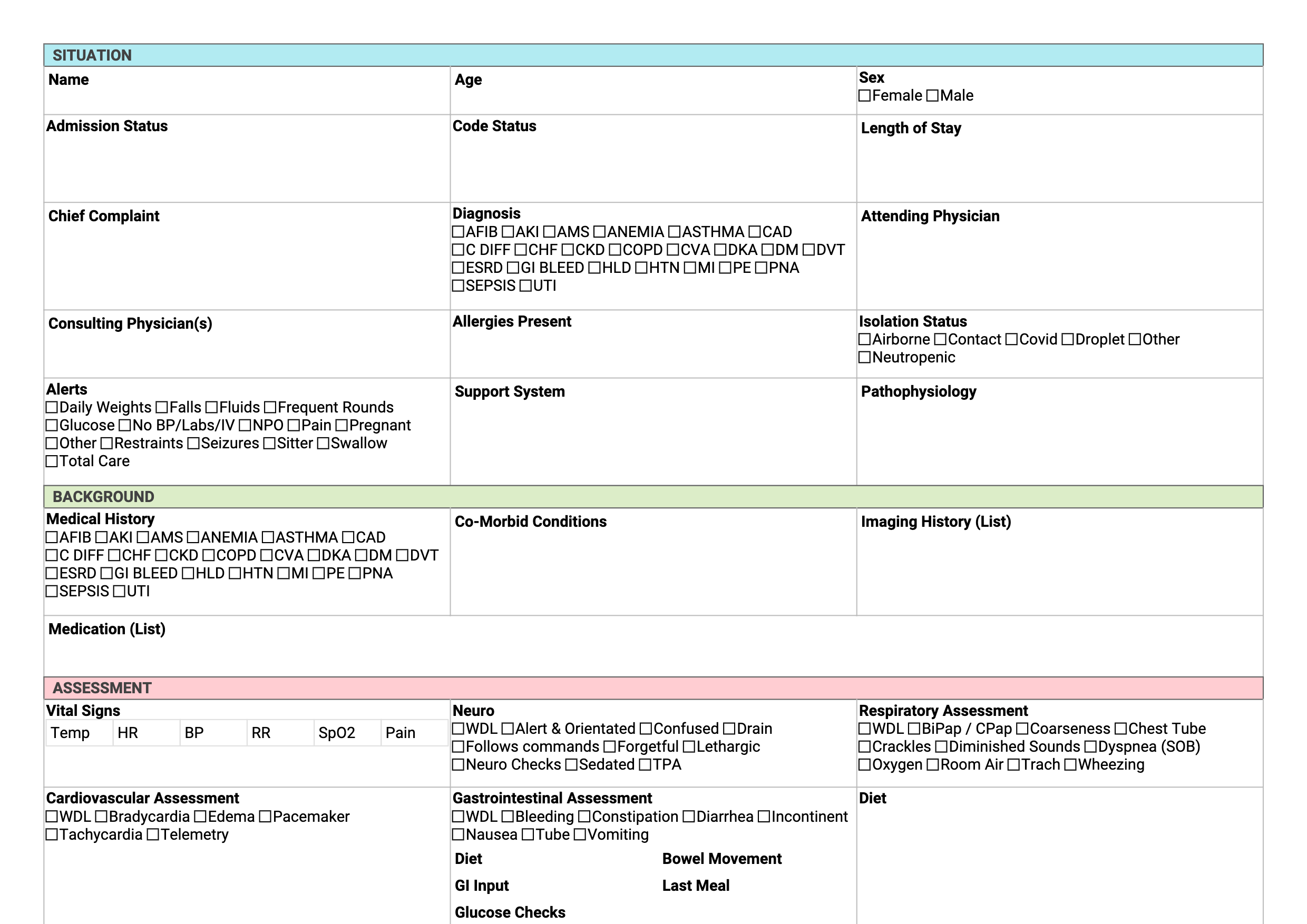
Clinical rotations are overwhelming in a specific way — you're learning to be a nurse while also trying to be a nurse, and the gap between the two is most visible when you're standing at the bedside and can't remember what assessment comes next. The nursing student brain sheet gives you a scaffold: a structured place to hold your patient data, organize your care plan priorities, and track the assessments and interventions you need to complete before your clinical instructor checks in. Download the free printable PDF below, or use the same template digitally in NurseBrain Synapse to build the documentation habits that carry you from clinicals to your first job.
What is a nursing school brain sheet?
Staff nurses use brain sheets to manage patient loads they've seen dozens of times before. Nursing students use them differently — the brain sheet is where the textbook knowledge and the real patient start to connect. Your clinical patient has labs, a diagnosis, a history, and a response to treatment that doesn't match the clean case study from class. The brain sheet is where you write down what's actually happening, organize the nursing diagnoses and interventions that apply, and track the clinical objectives your program requires you to meet. It's less about efficiency and more about building the systematic thinking pattern you'll rely on for the rest of your career.
What to track on a nursing school brain sheet
Patient demographics and primary diagnosis, chief complaint and admission reason, significant history and surgical history, current vital signs and trending, head-to-toe assessment findings, lab values and their clinical significance, current medications and nursing considerations, active nursing diagnoses with supporting data, planned interventions and rationale, clinical learning objectives for this rotation, instructor feedback and skill sign-offs, and end-of-shift reflection notes.
Student brain sheet vs. the patient chart
The patient chart is the official legal record — you'll document your formal assessments there under supervision. The student brain sheet is your learning tool: a place to write down your pre-shift prep, your assessment findings, your clinical reasoning, and the questions you want to ask your instructor. Experienced nurses can read the chart and hold their patient picture in memory; students need the brain sheet as an external scaffold while that mental model is still forming. NurseBrain Synapse is the digital version — carry your patient data and care plan notes from room to room and build the documentation habits that translate directly to your first nursing job.
Nursing school brain sheet FAQ
What should nursing students include on a clinical brain sheet?
Patient basics, current vital signs, head-to-toe findings, lab values with significance, active medications and their nursing considerations, nursing diagnoses with supporting data, planned interventions, and your clinical rotation objectives for the shift. Some students also note the questions they want to ask their instructor.
How do nursing students use brain sheets differently than staff nurses?
Staff nurses use brain sheets for efficiency — to manage multi-patient assignments quickly. Students use them for learning — to connect assessment data to diagnoses, track clinical reasoning, meet rotation objectives, and build systematic thinking. The structure matters more than the speed.
Are brain sheets HIPAA compliant for nursing students?
Student brain sheets containing patient data are PHI and must be handled accordingly. Don't write full names — use initials or patient room numbers. Keep the sheet on your person, not in your bag or car, and shred it before leaving the clinical site. Ask your program about its specific PHI policies for clinical documentation.
Can nursing students use a brain sheet app during clinicals?
Check your program's clinical phone policy first — some sites restrict phone use on the floor. If permitted, NurseBrain Synapse gives students the same template on their phone, which many find easier to update than a paper form during a busy clinical day.
How does a brain sheet help with nursing care plans?
The brain sheet is the foundation for the formal care plan — it holds the assessment data, abnormal findings, and clinical picture that your nursing diagnoses are built from. Students who complete a thorough brain sheet during clinical have everything they need to write the care plan afterward without reconstructing data from memory.