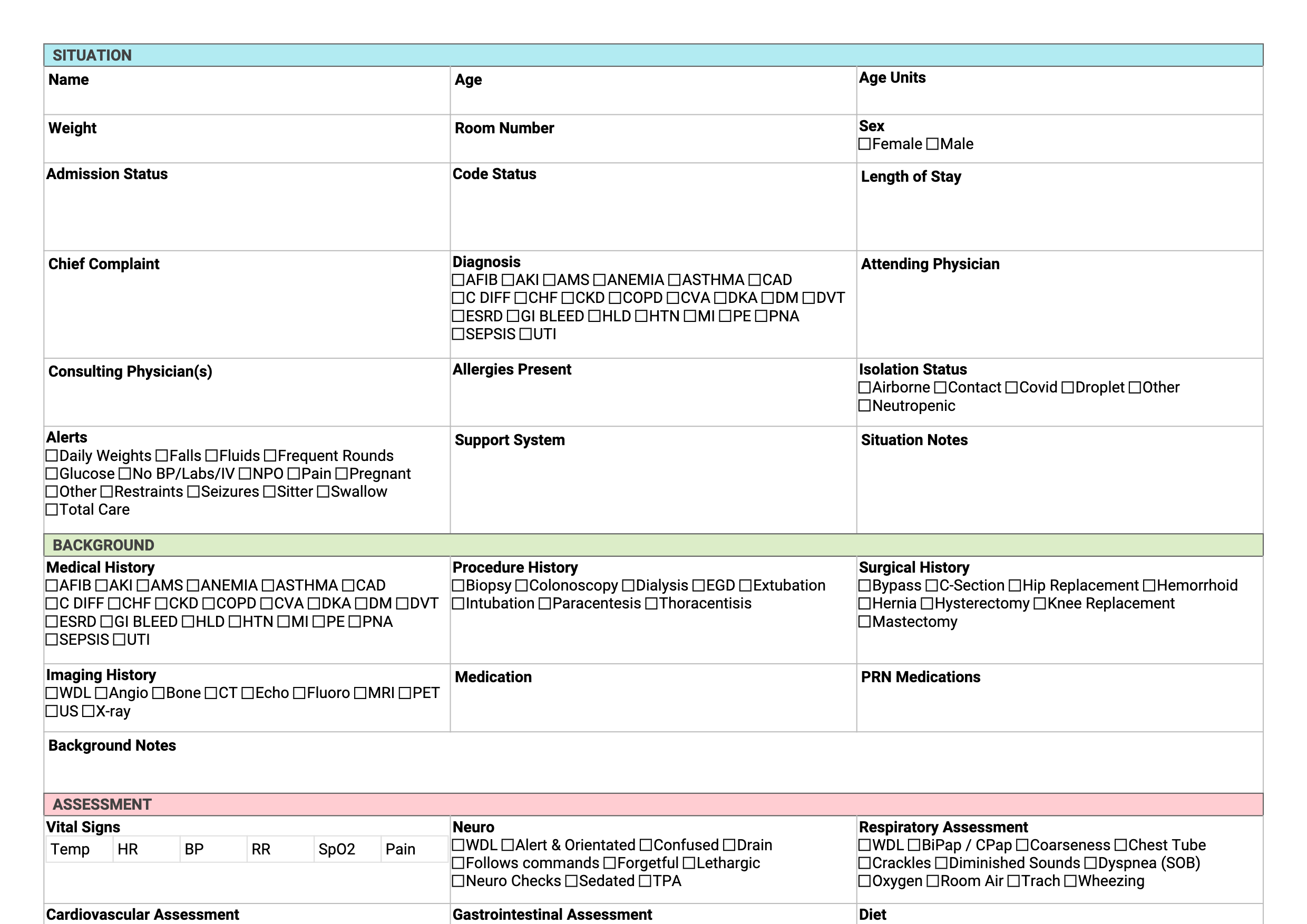
Pediatric nursing means a different patient — and a different family — for every room. Weights in kilograms, medications dosed by kg, normal vital sign ranges that shift with age, developmental assessments instead of standard neuro checks, and parents at the bedside who are part of every clinical decision. A good peds brain sheet keeps all of that organized for each patient without mixing up the 8 kg infant in room 4 with the 40 kg 8-year-old in room 6. Download the free printable PDF below, or use the same template digitally in NurseBrain Synapse across your peds assignment.
What is a pediatric brain sheet?
Peds nursing has a core challenge that adult nursing doesn't: nothing about the patient is standard. A 6-month-old, a 2-year-old, and a 10-year-old are completely different clinical presentations with different normal ranges, different developmental stages, different medication calculations, and different approaches to history-taking and assessment. The pediatric brain sheet anchors your shift around what's normal for this child at this weight and this age — the expected HR range, the correct weight-based dose for each medication, the developmental milestones to assess, and the family dynamics that shape how you communicate the plan.
What to track on a pediatric brain sheet
Peds brain sheets typically cover: patient weight in kg (always current — dosing depends on it); age and developmental stage; diagnosis and admission reason; current vital signs with age-appropriate ranges noted; medications with weight-based doses calculated and verified; IV access (site, gauge, date); fluid rate and type; pain assessment tool used (FLACC for non-verbal, numeric scale for older children); developmental assessment notes; dietary restrictions and feeding type (breast, formula, oral, NGT, TPN); isolation precautions; parent or guardian name and relationship; family communication notes (what they've been told, their questions, next family meeting); and discharge education status.
Peds brain sheet vs pediatric report sheet: same tool, age-adjusted
The concept is the same as any nursing brain sheet, but the peds version adds weight-based dose verification, age-appropriate vital sign ranges, and family communication tracking as core components rather than optional notes. The free PDF template organizes these peds-specific fields on one page. NurseBrain Synapse is the digital version — use it on your phone or tablet to keep your peds assignment organized and generate SBAR handoffs without recopying weight and dose calculations.
Pediatric Nurse FAQ
What does a pediatric nurse do?
A pediatric nurse cares for patients from infancy through adolescence, adjusting every clinical decision to the child's age, weight, and developmental stage. On a typical shift you're assessing vitals against age-appropriate norms, calculating and verifying weight-based medication doses, using developmentally appropriate pain scales, communicating with parents as partners in care, performing age-specific developmental assessments, managing family anxiety alongside clinical management, and preparing families for discharge with condition-specific teaching.
How does pediatric nursing differ from adult nursing?
The core difference is that nothing defaults to adult norms. Every vital sign has an age-specific range; every medication requires a weight-based calculation; every assessment has a developmentally appropriate version; and every patient comes with a family that is part of the care team whether they're comfortable in that role or not. Peds nurses also manage a much wider range of diagnoses — from RSV bronchiolitis and febrile seizures to oncology patients and complex cardiac malformations — within the same unit.
What pain scales are used in pediatric nursing?
Pain assessment in pediatrics uses age-appropriate tools. Neonates and infants: NIPS (Neonatal Infant Pain Scale) or CRIES. Preverbal children and children with developmental disabilities: FLACC (Face, Legs, Activity, Cry, Consolability) — scored 0–10 by observation. Children 3–7: Faces Pain Scale-Revised (FPS-R), or Wong-Baker Faces. Children 8 and older who can self-report: Numeric Rating Scale 0–10. Always document which scale was used alongside the score.
How many patients does a pediatric nurse take?
Most pediatric general care nurses carry 3–5 patients depending on acuity and patient age. Infants and higher-acuity children may require lower ratios. Step-down or intermediate care peds units may run 2–3 per nurse. General peds floors are typically 4–5 patients. PICU is a separate, higher-acuity unit with 1:1 or 1:2 ratios.
Can I use a digital pediatric brain sheet?
Yes. NurseBrain Synapse works on your phone or tablet. It's designed for bedside use and lets you track weight-based doses, age-appropriate vitals, and family communication notes for each peds patient on your assignment. Available on iOS and Android.