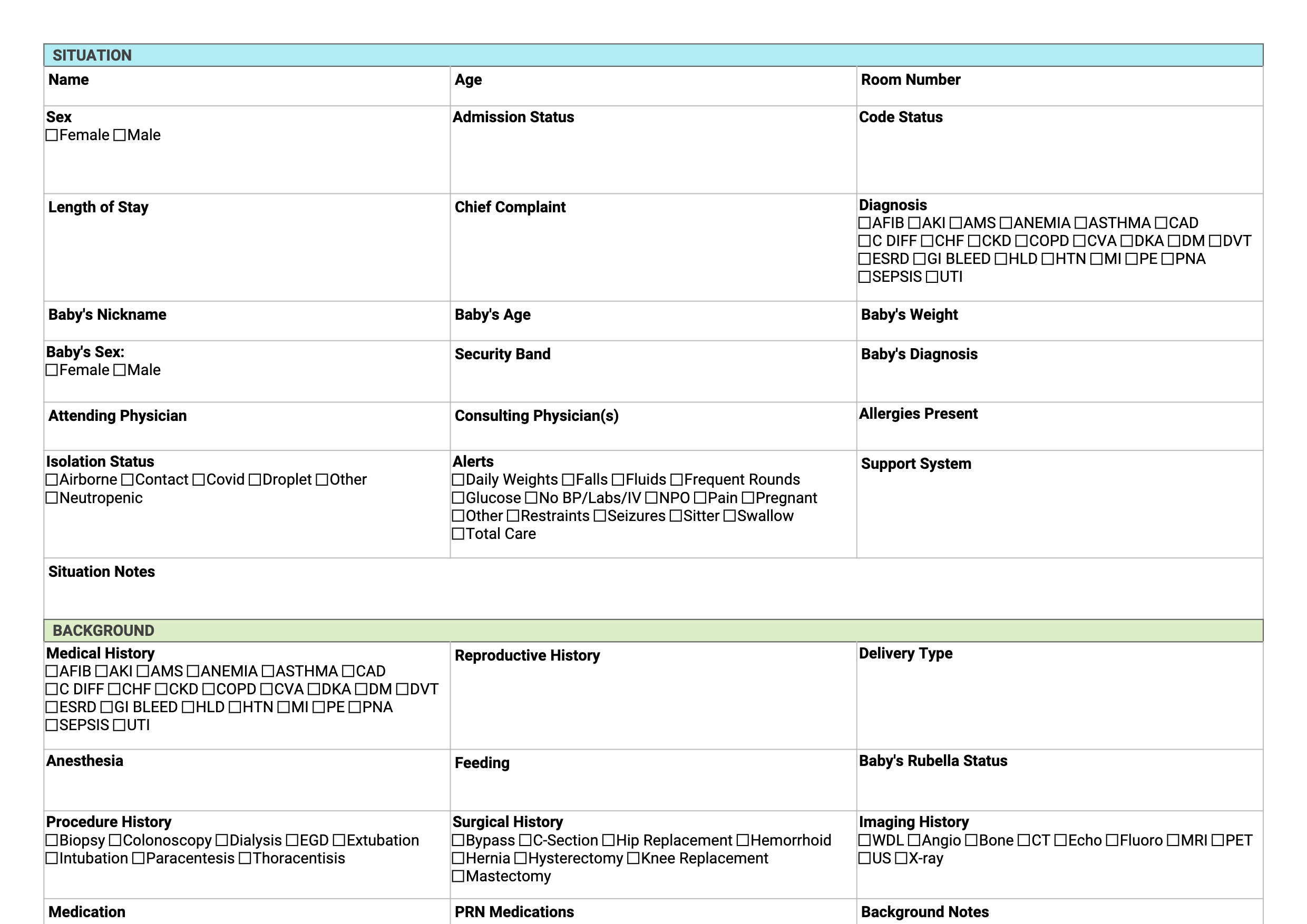
Postpartum nursing means managing mother-baby pairs — two patients in one room, each with their own assessment, and usually 3 or 4 couplets on your assignment. A good postpartum brain sheet tracks fundal height and firmness, lochia, pain, breastfeeding or bottle feeding progress, newborn vitals and weight, and discharge teaching status so nothing slips between a busy shift and a discharge that has to happen by noon. Download the free printable PDF below, or use the same template digitally in NurseBrain Synapse so your couplet notes stay organized from morning assessment through discharge.
What is a postpartum brain sheet?
Postpartum nursing is organized around couplets: a mother and her newborn assessed together, with teaching happening in parallel. You're doing BUBBLE-HE assessments on the mother and newborn screens on the baby — sometimes simultaneously. The postpartum brain sheet tracks both: maternal recovery milestones (fundus, lochia, episiotomy or incision site, elimination, pain, Homan's sign, emotional status, breastfeeding) alongside newborn status (weight trend, feeding, urine and stool output, jaundice screen, hearing screen, metabolic screen, circumcision if applicable). It's the tool that keeps you from arriving at room 3's discharge and realizing you never checked whether the metabolic screen was complete.
What to track on a postpartum brain sheet
Postpartum brain sheets typically cover two sets of data — one for the mother, one for the newborn. For the mother: type of delivery (SVD, C-section, vacuum/forceps, VBAC); hours since delivery; fundus (firmness, position, deviation); lochia (color, flow, odor); perineal or incision assessment; urinary output (voiding, Foley removal time if applicable); pain score and management; vital signs; IV access and fluid; breastfeeding or formula feeding progress; emotional and bonding status; and discharge education completed. For the newborn: gestational age; birth weight and current weight; feeding type and latch; urine and stool output; temperature; jaundice screen (bili level or transcutaneous if done); metabolic screen status; hearing screen status; circumcision status; and PKU or state screenings due.
Postpartum brain sheet vs mother-baby report sheet: same tool
Whether you call it a brain sheet, a couplet sheet, or a report sheet, every postpartum nurse keeps some version of this during a busy shift. The free PDF template above covers both mother and newborn on one page per couplet. NurseBrain Synapse is the digital version — it tracks your BUBBLE-HE assessments, newborn screenings, and teaching checklist digitally so when discharge time comes at 0900, you know exactly what's done and what still needs to happen.
Postpartum Nurse FAQ
What does a postpartum nurse do?
A postpartum nurse cares for new mothers and their newborns in the period after delivery — typically for 24–48 hours after a vaginal delivery or 48–96 hours after a cesarean. You're performing BUBBLE-HE assessments on the mother (breasts, uterus, bladder, bowel, lochia, episiotomy/incision, Homan's, emotional status), monitoring newborn vitals and weight, supporting breastfeeding or bottle feeding, completing newborn screenings, managing maternal pain, educating the family on newborn care and warning signs, and coordinating discharge — all while managing 3 or 4 couplets on your assignment.
How many patients does a postpartum nurse take?
Most postpartum nurses manage 3–4 couplets per shift, which means 6–8 patients (mother + baby) if you count both. Some hospitals staff mother-baby units at 3:1 couplets; others run 4:1 or higher. AWHONN recommends no more than 3:1 couplets for stable postpartum patients. C-section patients early in recovery may require higher acuity attention.
What is a BUBBLE-HE assessment?
BUBBLE-HE is a mnemonic for the postpartum maternal assessment: Breasts (engorgement, nipple condition, breastfeeding latch), Uterus (fundal height, firmness, position), Bladder (voiding, output), Bowel (GI sounds, bowel movement, constipation), Lochia (color, flow, odor), Episiotomy or incision (REEDA: redness, edema, ecchymosis, drainage, approximation), Homan's sign (calf tenderness, DVT screen), Emotional status (bonding, mood, baby blues vs. PPD screening).
What newborn screenings should I track on my postpartum brain sheet?
Standard newborn screenings vary by state but typically include: metabolic screen (PKU and state-specific panel — usually done at 24–48 hours of age), hearing screen, bilirubin screening (clinical assessment plus transcutaneous or serum bili if indicated), critical congenital heart disease (CCHD) screen with pulse oximetry, and hepatitis B vaccine first dose. Note the time each screen was done or is due, and flag any results that need follow-up before discharge.
Can I use a digital postpartum brain sheet?
Yes. NurseBrain Synapse works on your phone or tablet. You can track BUBBLE-HE findings, newborn weights and feedings, screening statuses, and discharge teaching progress digitally for each couplet on your assignment. When it's time for discharge, your teaching checklist and handoff notes are already built. Available on iOS and Android.