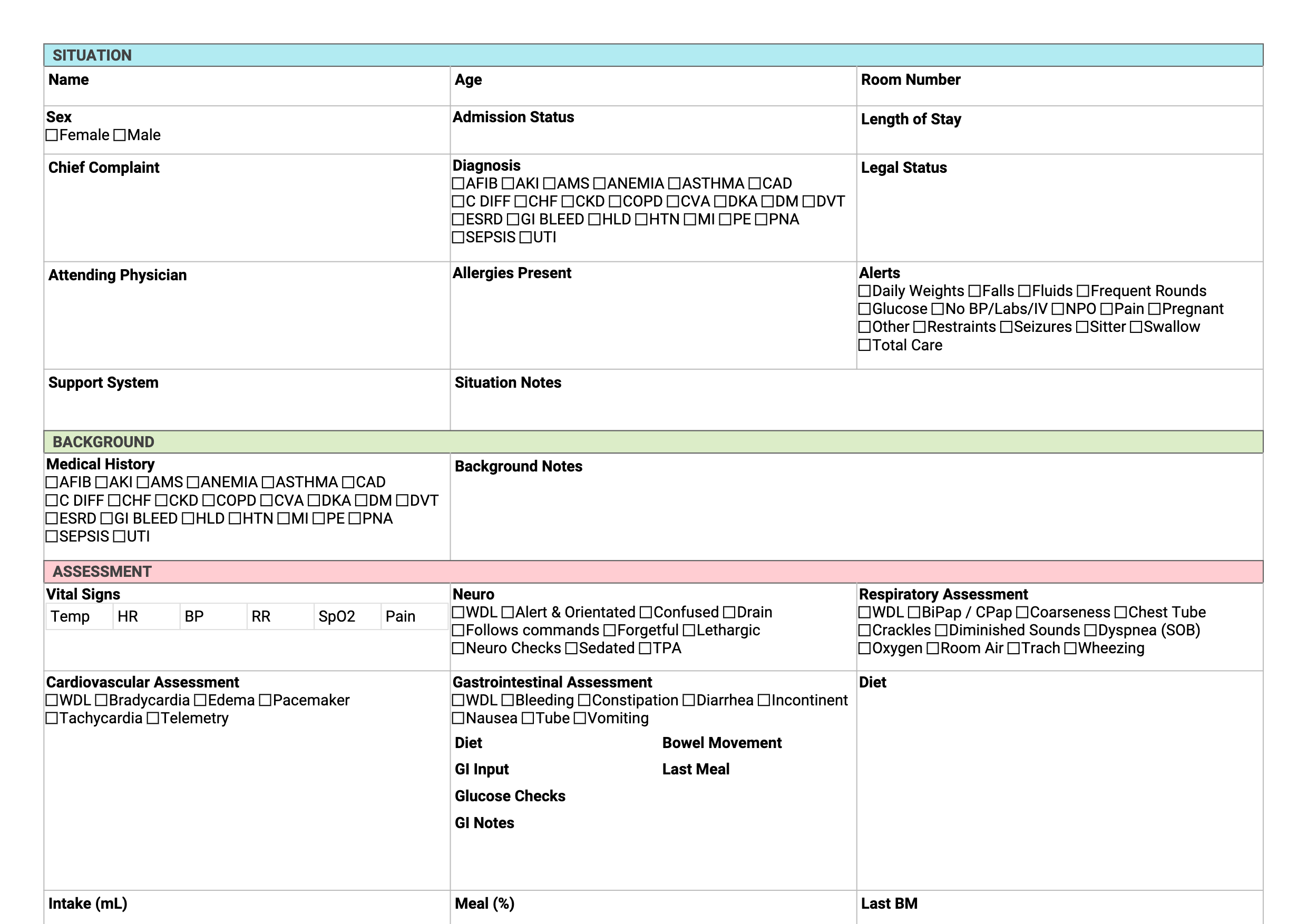
Psych nursing doesn't look like other units — your patients are ambulatory, your interventions are largely verbal, and your documentation centers on behavior, not vitals. The psych brain sheet is how you keep every patient's presentation organized: current mental status, safety check times, PRN usage, behavioral escalation patterns, and the pieces of the therapeutic relationship that matter for a complete handoff. Download the free printable PDF below, or use the same template digitally in NurseBrain Synapse so safety check documentation and behavioral notes stay organized across your entire assignment.
What is a psychiatric nursing brain sheet?
Psych floors run on observation, de-escalation, and a precise paper trail. You may have eight or ten patients, most of them walking around, and your clinical picture for each one is built from behavioral data rather than lab values or vitals trends. The brain sheet is where you anchor each patient's baseline: their diagnosis, their current presentation, the last time they were checked on, whether they're on 1:1 or Q15s, what PRNs have been given and when, and the behavioral escalation triggers the previous nurse flagged in report. It's not the chart — it's the working tool that helps you give safe, therapeutic care without losing track of any patient between checks.
What to track on a psychiatric nursing brain sheet
Safety check frequency (Q15, Q30, 1:1), last check time and patient location, current mental status (orientation, mood, affect, thought content), behavioral observations and escalation triggers, scheduled and PRN psychiatric medications with times given, contraband status and sharps restrictions, milieu dynamics affecting the patient, treatment team contacts and attending, and handoff-critical behavioral notes from the previous shift.
Psych brain sheet vs. the EMR
The EMR is where nursing notes, medication administration, and safety check documentation live permanently. The psych brain sheet is what you carry on the floor — a fast-access reference for all ten patients that you can scan at the nurses' station to confirm who's due for a check, who took their PRN two hours ago, and who the night shift flagged as escalating. Your charted notes and the brain sheet serve different purposes. NurseBrain Synapse is the digital version — track safety check times, behavioral notes, and PRN logs from your phone so the full picture travels with you during rounds.
Psychiatric nursing brain sheet FAQ
How do you document safety checks on a psych brain sheet?
Track the time of each check, where the patient was (dayroom, room, hallway), and their behavioral status at that moment. If the check is Q15 observation, note it clearly. The brain sheet helps you confirm nobody was missed between formal chart entries.
What mental status details should go on a psych brain sheet?
Orientation (person, place, time), mood and affect, thought content (organized vs. disorganized, any SI/HI), insight, and behavioral baseline for this patient. Flag changes from admission baseline so the oncoming nurse knows what's new.
How do you track PRN medications on a psych brain sheet?
Note the medication, dose, time given, indication (anxiety, agitation, insomnia), and effectiveness. This is especially important for antipsychotics and benzodiazepines where frequency matters for both safety and therapeutic response.
What's different about a psych brain sheet compared to med-surg?
Psych brain sheets prioritize behavioral data — mental status, safety check times, escalation triggers, and therapeutic response — rather than vitals, labs, and procedures. You're tracking presentation and behavior across a high-patient-load unit where most clinical data is observational.
Can psych nurses use a brain sheet app during checks?
Yes. NurseBrain Synapse lets you log safety check times, behavioral notes, and PRN updates from your phone as you move through the milieu, so your documentation stays current without returning to the nurses' station after every patient.