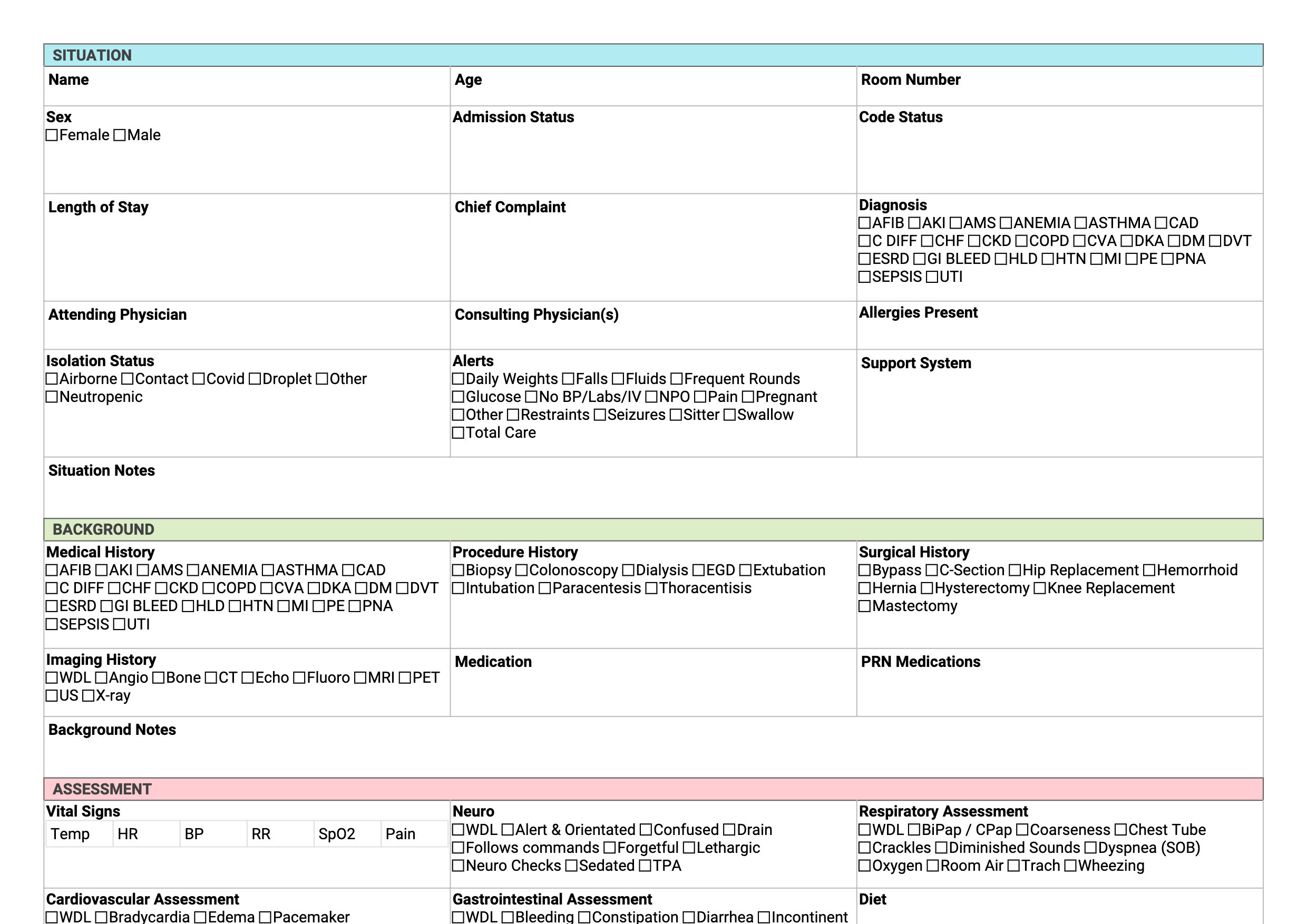
Telemetry nursing means watching hearts all shift — strip interpretation running in the background of every patient assessment, drip titrations based on rhythm response, and the constant awareness that the patient in room 12 who was in sinus rhythm at 0700 may be in a-fib with RVR by 1100. A good telemetry brain sheet tracks current rhythm, strip findings, cardiac medications and doses, and the events that change the clinical picture so you can give a complete handoff without rebuilding the whole shift from memory. Download the free printable PDF below, or use the same template digitally in NurseBrain Synapse.
What is a telemetry brain sheet?
Telemetry floors combine the patient load of a med-surg unit with the cardiac monitoring demands of a step-down ICU. Your patients are post-cardiac procedure, post-MI, admitted for arrhythmia management, CHF exacerbation, or syncope workup — and all of them are on continuous cardiac monitoring that you're responsible for interpreting alongside your nursing assessment. The telemetry brain sheet adds a cardiac layer to your standard floor nursing documentation: current rhythm and rate, significant strip findings, antiarrhythmic or cardiac drip tracking, and any events (rapid response, rhythm change, symptoms) that happened during your shift.
What to track on a telemetry brain sheet
Telemetry brain sheets cover standard floor nursing data plus cardiac-specific fields: diagnosis and cardiac history; current rhythm (rate, rhythm name, key features); PR, QRS, QT intervals if relevant; significant strip findings (events, rhythm changes, alarms addressed); cardiac medications (antiarrhythmics, anticoagulants, rate-controlling agents — doses and times); continuous drips (dobutamine, amiodarone, diltiazem, heparin — rate and parameters); 12-lead EKG ordered or completed; chest pain events (time, description, radiation, nitrate given, provider notified); vitals with telemetry correlation; IV access; and discharge planning status (education on anticoagulation, activity restrictions, follow-up).
Telemetry brain sheet vs step-down report sheet: same tool, cardiac focus
Telemetry and cardiac step-down nurses use the same brain sheet concept as any floor nurse, but the cardiac-specific additions — rhythm tracking, drip parameters, strip event log — are non-negotiable on a tele floor. The free PDF template includes a dedicated rhythm and events section. NurseBrain Synapse is the digital version — track rhythm changes, antiarrhythmic drip titrations, and cardiac event notes on your phone so your handoff includes the full cardiac picture.
Telemetry Nurse FAQ
What does a telemetry nurse do?
A telemetry nurse monitors and cares for patients on continuous cardiac monitoring — typically post-cardiac procedure, post-MI, CHF exacerbation, arrhythmia management, syncope workup, or patients requiring rate or rhythm control drips. On a typical shift you're interpreting cardiac strips in real time, titrating antiarrhythmic or rate-controlling drips to rhythm response, assessing chest pain and initiating the chest pain protocol, managing anticoagulation for AF or DVT, and preparing patients for discharge with education on cardiac medications and activity restrictions. Most telemetry floors run 4–5 patients per nurse with continuous monitoring support from a centralized monitoring tech or nurse.
What rhythms should a telemetry nurse know?
Telemetry nurses need proficiency in: normal sinus rhythm and sinus variants (brady, tachy, arrhythmia); atrial dysrhythmias (PACs, AF, a-flutter, SVT, MAT); junctional rhythms; ventricular dysrhythmias (PVCs, V-tach, V-fib); heart blocks (1st degree, 2nd degree Type I and II, 3rd degree/complete); pacemaker rhythms (demand, DDD, underlying rhythm vs. paced); and ST segment changes indicating ischemia or injury. You should be able to identify rate, rhythm, and interval measurements on a 6-second strip and correlate findings with the patient's clinical presentation.
What is the difference between telemetry and a step-down unit?
The terms are often used interchangeably but step-down (also called intermediate care or progressive care) typically refers to a higher-acuity level that sits between the ICU and a regular floor. Step-down units monitor hemodynamics more closely, may manage arterial lines or low-dose vasoactive drips, and have lower nurse-to-patient ratios (usually 1:3 or 1:4) than a general telemetry floor (usually 1:4 or 1:5). Both use continuous cardiac monitoring.
How do I document a rhythm change on my telemetry brain sheet?
When you identify a significant rhythm change, document: time noted; rhythm name and rate (e.g., 'new AF with RVR at 130s'); your assessment (patient symptoms — palpitations, dizziness, chest pain, hemodynamic status); any immediate intervention (positioned, O2 applied, IV access confirmed); provider notified with time and name; orders received; your response and the patient's rhythm and hemodynamic response after intervention. A complete narrative in your brain sheet ensures your handoff and nursing note are consistent.
Can I use a digital telemetry brain sheet?
Yes. NurseBrain Synapse works on your phone or tablet. You can log rhythm status, strip events, drip titrations, and cardiac event notes for each patient on your telemetry assignment. When it's time for handoff, the cardiac events and rhythm changes are already documented so you're not reconstructing a busy shift from memory. Available on iOS and Android.