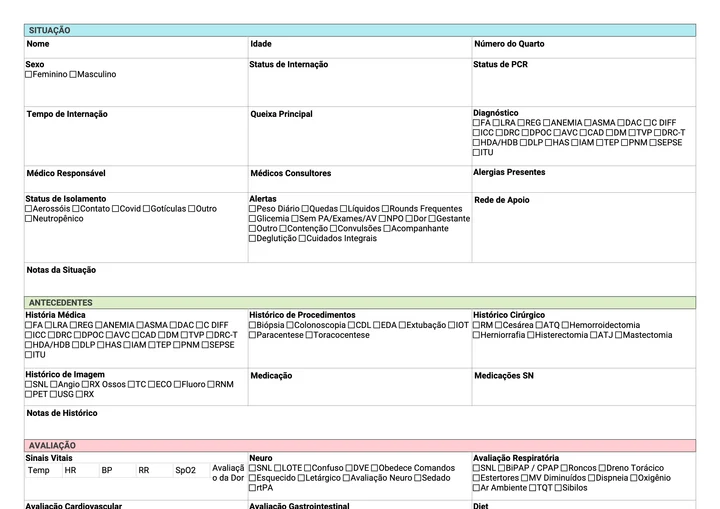
Post-anesthesia recovery — care plan
Gas Exchange Impairment related to residual anesthesia, opioids, and obstructive sleep apnea.
- Monitor RR, SpO₂, and sedation level continuously; report SpO₂ <92% or RR <10.
- Keep HOB elevated; have CPAP and suction at bedside per OSA precautions.
- Encourage deep breathing; titrate ordered O₂ to keep SpO₂ ≥ 94%.
- Hold further opioids and notify the provider for excess sedation or apnea.
Acute Pain related to surgical incisions and abdominal insufflation.
- Reassess pain q15 min using a 0–10 scale; document and treat per orders.
- Administer ordered analgesia and reassess effect and respiratory status.
- Position for comfort and support incisions during movement.
Nausea related to general anesthesia and opioid analgesia.
- Assess for nausea or retching q15 min; administer ordered antiemetics.
- Minimize sudden position changes; advance intake slowly per recovery protocol.
- Monitor for aspiration risk; keep suction available.
Coordinate with anesthesia and the receiving floor for hand-off once discharge criteria (Aldrete ≥9, stable vitals, controlled pain and PONV) are met. Escalate to anesthesia for airway compromise, uncontrolled pain or PONV, or bleeding.