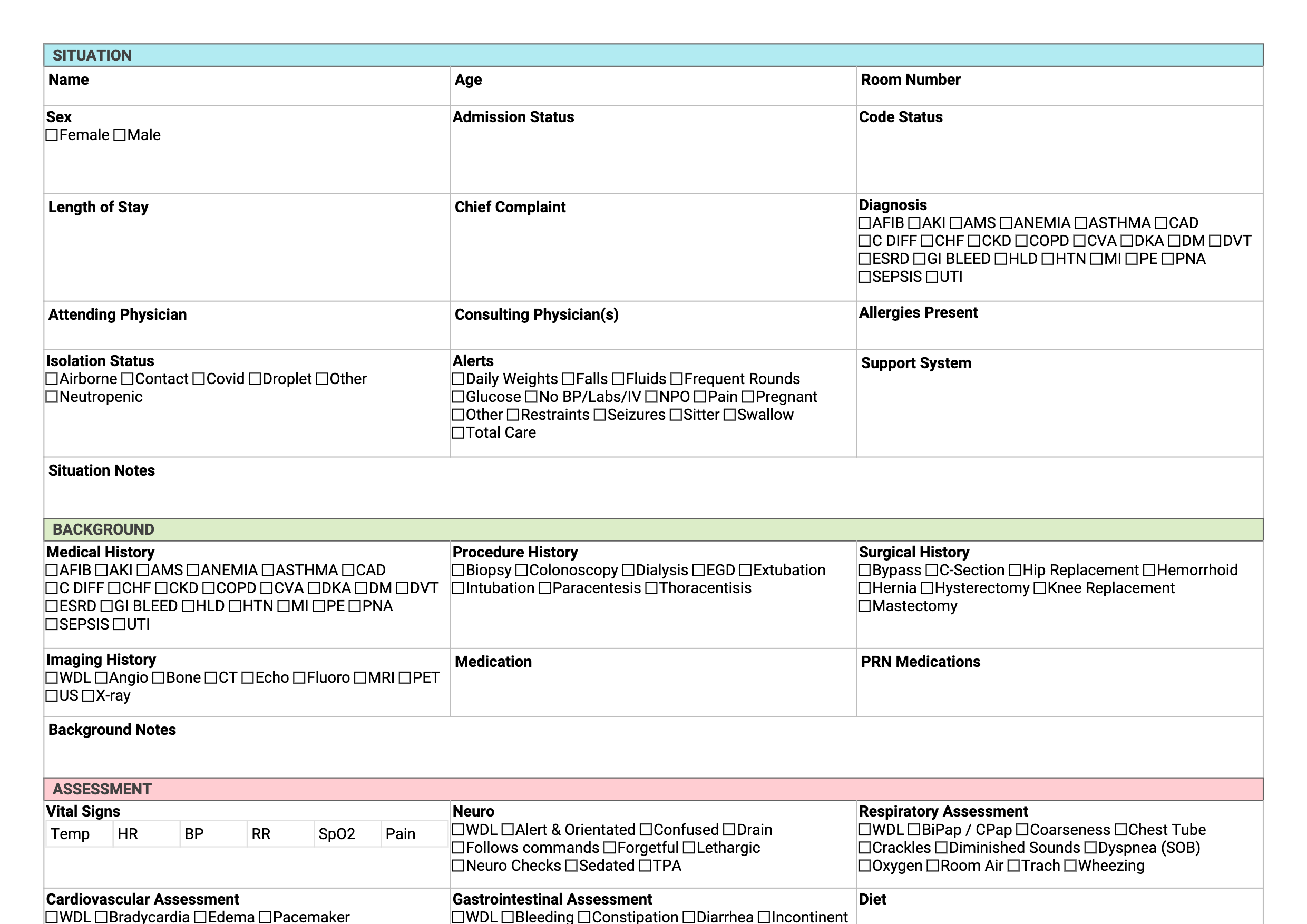
LTC nursing is high-volume, relationship-based care where your residents' baselines are everything. The same person who's usually up and eating well is now refusing breakfast and sleeping through activities — that's a clinical change that matters, and the brain sheet is how you catch it across a 30-resident assignment. Track care schedules, behavioral status, refusal patterns, skin concerns, and the resident-specific details that don't fit neatly in the chart but inform every clinical decision on your shift. Download the free printable PDF below, or use the same template digitally in NurseBrain Synapse so resident-specific notes stay organized across your full assignment.
What is a long-term care nursing brain sheet?
LTC nurses carry large assignments — often 20 to 35 residents — with widely varying acuity, complex medication regimens, and extensive family communication expectations. The brain sheet is how you manage that load without losing anyone in the shuffle. It holds each resident's current clinical status, care schedule requirements, behavioral baseline, active wound or skin concerns, and the family notes that make every shift run smoother. When a resident's cognitive baseline includes sundowning that starts at 1400, that's not in the chart — it's on the brain sheet, passed forward every handoff.
What to track on a long-term care nursing brain sheet
Resident names and room numbers, current cognitive and behavioral baseline, ADL assistance level and care schedule, medication administration times and PRN usage, skin integrity concerns and wound status, dietary restrictions and intake notes, fall risk and current fall precautions, family contact expectations, behavioral changes from baseline, and handoff-critical observations from the previous shift.
LTC brain sheet vs. the care plan
The care plan and MDS documentation are the authoritative record — they drive reimbursement, regulatory compliance, and the formal plan of care. The brain sheet is what you work from on the floor: current status, today's priorities, and the resident-specific behavioral details that don't fit in a dropdown field. Your charted assessments feed the permanent record; the brain sheet keeps you organized across an assignment where you simply can't hold 30 individual pictures in memory. NurseBrain Synapse is the digital version — track resident changes, PRN usage, and family contacts from your phone so the full clinical picture is with you during rounds.
Long-term care nursing brain sheet FAQ
How do you manage a 30-resident assignment with a brain sheet?
Organize residents by care priority and room cluster. Use the brain sheet to flag who has time-sensitive medications, active skin concerns, or behavioral changes from baseline. Check off care as it's delivered so you can quickly confirm coverage at any point in the shift.
What baseline information should LTC nurses track?
Each resident's usual cognitive status, mobility level, behavioral patterns (sundowning, agitation triggers), dietary preferences and intake norms, and family communication expectations. Deviations from baseline are the clinical signal in LTC — the brain sheet makes them visible.
How do LTC brain sheets handle wound and skin documentation?
Track wound location, current dressing and change schedule, wound appearance at last assessment, and any changes in size or drainage. The brain sheet holds the current status so you're not opening the chart mid-shift to remember what the wound looked like this morning.
Are LTC brain sheets HIPAA compliant?
Brain sheets are working tools that must be handled as PHI. Keep them on your person during the shift, don't leave them at the nurses' station or in common areas, and shred them at end of shift. They should never leave the facility.
How is an LTC brain sheet different from a hospital nursing brain sheet?
LTC brain sheets prioritize resident baseline status, ADL schedules, behavioral patterns, and long-term care plan details rather than acute vitals, procedures, and lab trends. The clinical picture in LTC evolves over weeks and months — changes from baseline matter more than point-in-time values.