NurseBrain Blog
Insights on nursing workflows, AI in healthcare, clinical documentation best practices, SBAR templates, brain sheet tips, and NurseBrain product updates.

Delirium vs. Dementia: Recognizing an Acute Change
Recognize a new change in attention or behavior, ask about baseline function, and communicate possible delirium without dismissing it as dementia.

Pressure Injury Prevention: Skin, Positioning, and Heel Checks
Pressure injury prevention combines skin assessment, individualized repositioning, heel offloading, and checking the patient’s response.

Oxygen Delivery Devices: What Nurses Should Check
Check oxygen delivery devices against the prescribed target, equipment setup, patient response, and changing support needs.

Hypoglycemia in Adults: Nursing Recognition and Reassessment
Recognize adult hypoglycemia, choose the appropriate protocol pathway, and reassess both glucose and the patient’s condition.

Standard vs. Transmission-Based Precautions: A Nursing Refresher
Review how Standard Precautions apply to every patient and how Contact, Droplet, and Airborne Precautions add specific measures.

Medication Reconciliation: Questions Nurses Can Ask at Admission
Medication reconciliation questions help nurses clarify what patients actually take, identify uncertain details, and communicate discrepancies.

Pain Reassessment in Nursing: Relief, Function, and Side Effects
Pain reassessment in nursing should describe relief, function, adverse effects, and the next action after treatment.

Orthostatic Blood Pressure: A Practical Nursing Assessment Guide
Measure orthostatic blood pressure with clear positions and timing, observe symptoms, and document when standing cannot be completed.
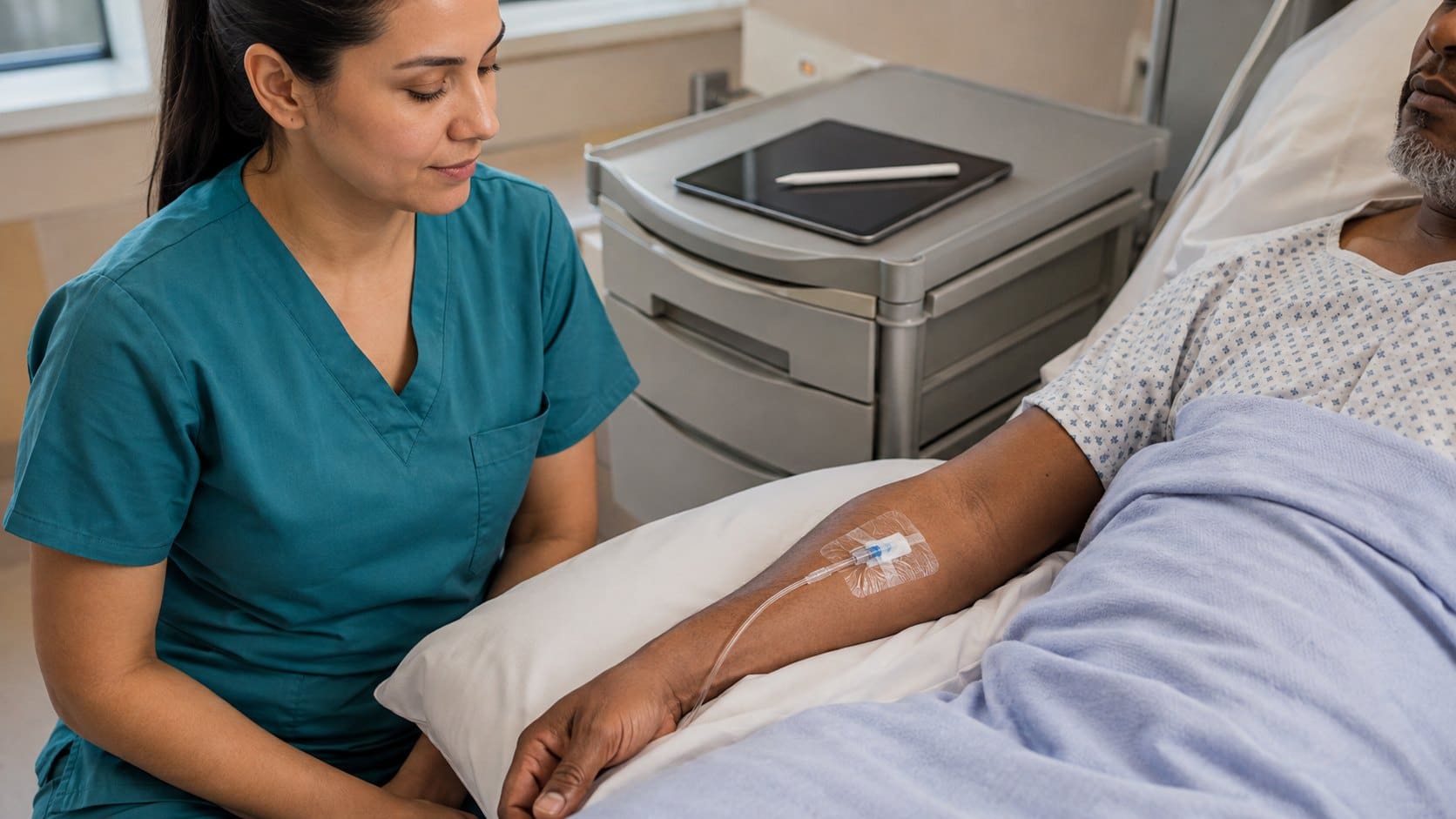
Peripheral IV Assessment: What to Check and When to Escalate
Peripheral IV assessment includes the patient’s symptoms, insertion site, dressing, infusion, and prompt response to suspected complications.